Cruce Saunders
  • Player card
  • Workshop
  • List
  • Contact

Wharton + NestIQ

Jul 2026San Francisco

Tip: NestIQ went from my first pitch to the App Store in 19 days.

Cruce SaundersLevel 8
  • Player card
  • Workshop
  • List
  • Contact
The Golden Gate Bridge from its walkway: both red towers and the full span over the bay, with program classmates walking along the railing.

Wharton + NestIQ

CEO of a team of 5

Jul 2026San Francisco

Back to the worldWharton + NestIQ
  • Player card
  • Workshop
  • List
  • Contact
  • Back to the world
  • Player card
  • Workshop
  • List
  • Contact

Wharton + NestIQ

Wharton Global Youth's two-week startup program in San Francisco, on a full scholarship.

I pitched NestIQ on day one, led its team of five as CEO and built its iPhone app.

NestIQ won Best MVP out of about 100 students and is live on the App Store.

classmates asked to join my team
1212
activities in the app
5757
people on NestIQ's waitlist
4646

Two weeks at Wharton's San Francisco campus

Wharton Global Youth runs programs for high school students on behalf of the Wharton School, the University of Pennsylvania's business school. Innovation and Startup Culture is its two-week startup program at Wharton's San Francisco campus: about 50 hours a week of classes, founder talks and team work, ending in a pitch competition in front of Bay Area entrepreneurs. My session ran July 5 to 17, 2026. The program costs about $9,000, and a full scholarship covered it.
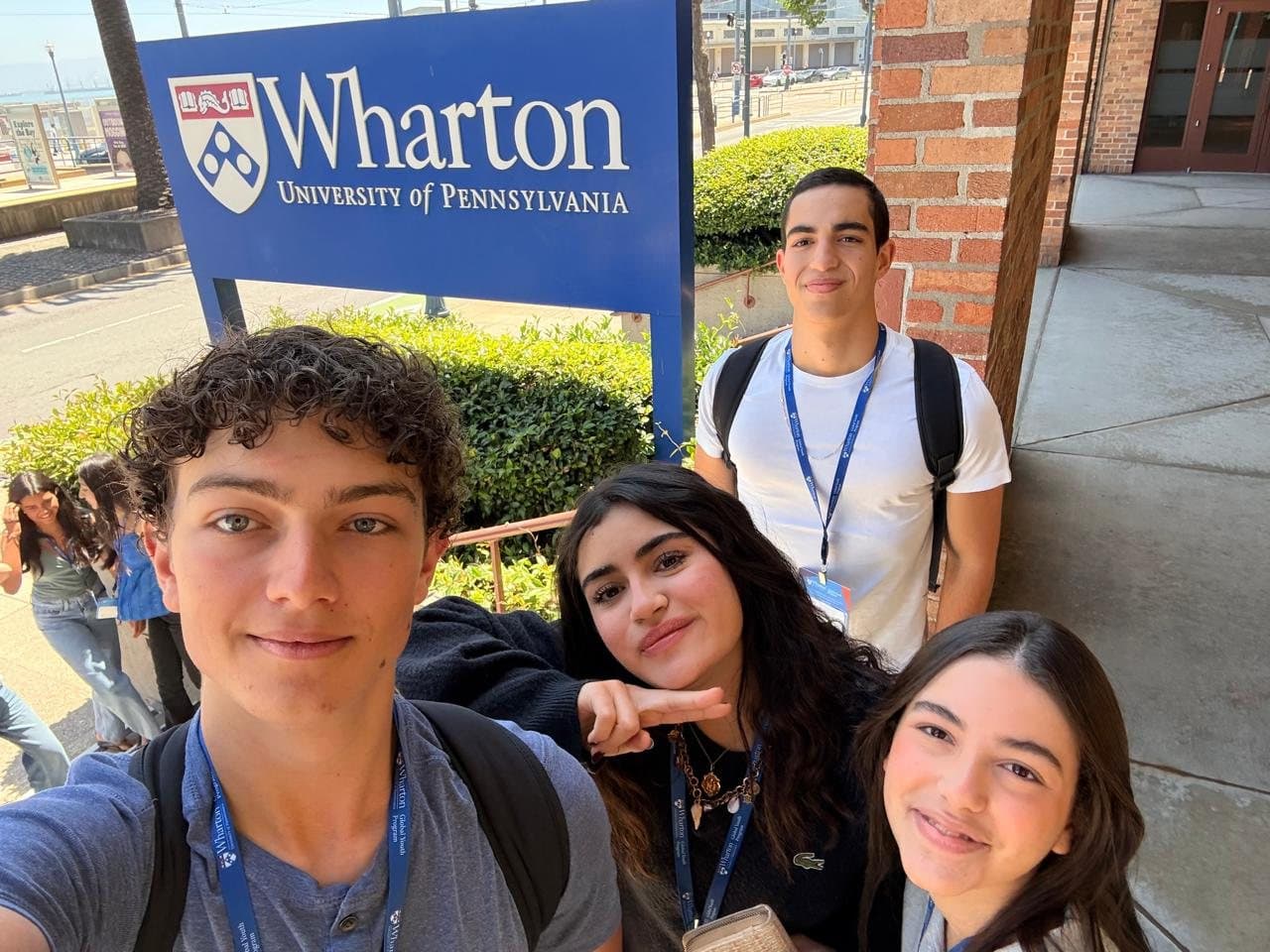
Cruce taking a selfie with three Wharton Global Youth classmates in front of the blue Wharton, University of Pennsylvania sign at the San Francisco campus.

A one-minute pitch filled a team

On the first day, students could pitch an idea in one minute and recruit a team around it. I pitched a daily program to help parents support their child's brain development in the first three years, when it grows fastest. Twelve classmates asked to join, so I got to pick my team instead of joining one. I chose four teammates and led the five of us as CEO for the rest of the program.

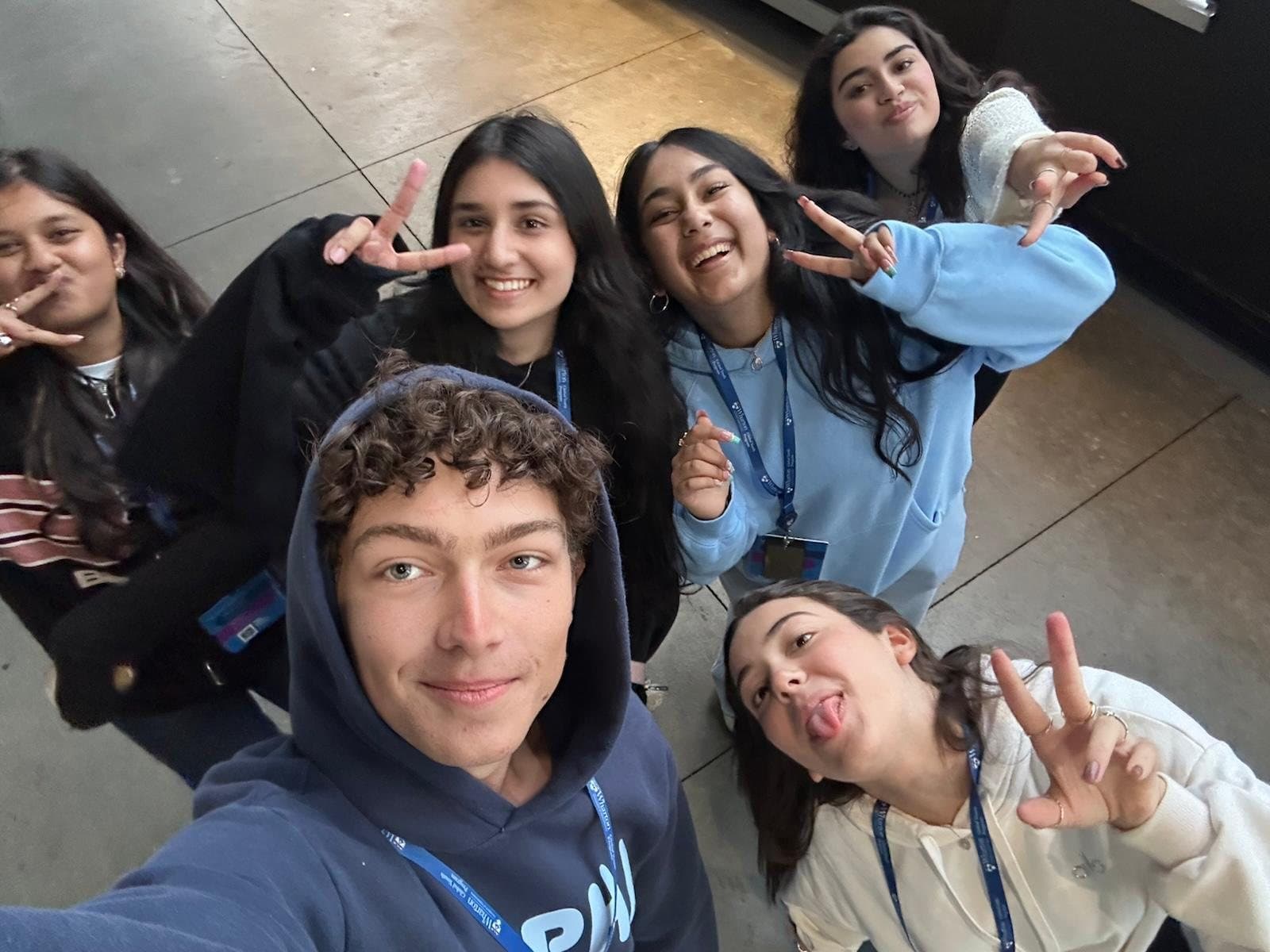
Cruce in a navy hoodie taking a selfie with five Wharton Global Youth classmates, all wearing program lanyards.

A day with NestIQ

NestIQ gives parents of children 0 to 3 about 15 minutes a day of screen-free activities designed to support early cognitive development. The program draws on 48 peer-reviewed studies. Here is a parent's day with it, shown with a demo child named Mia.

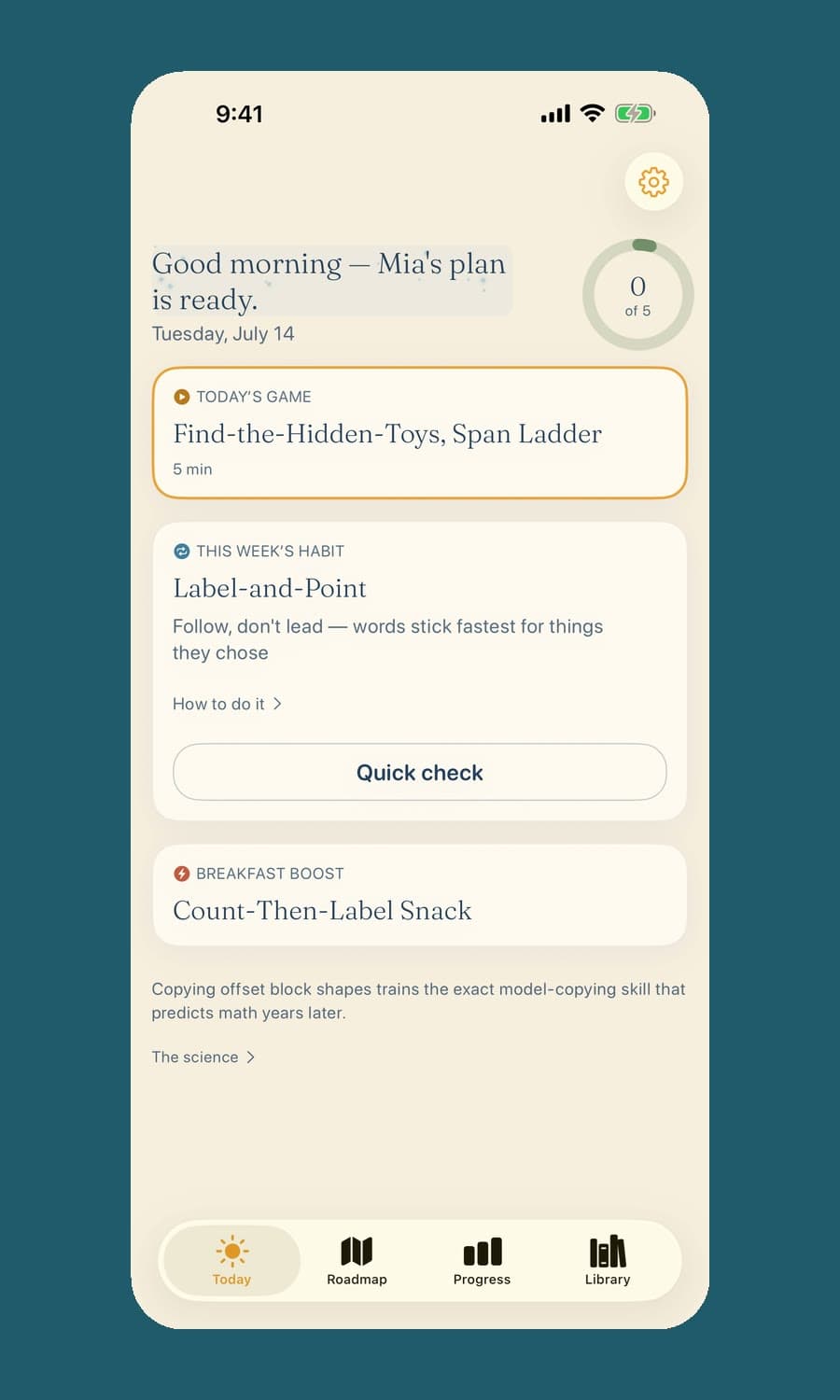
  1. NestIQ's Today screen for a demo child named Mia: today's game, Find-the-Hidden-Toys, this week's habit, Label-and-Point, and a breakfast boost.
    1

    Step 1: Morning: the plan is ready

    Each morning the app has the day's plan waiting: one five-minute game, like Find the Hidden Toys, a habit to practice all week, like labeling the things your child points at, and an idea for breakfast.

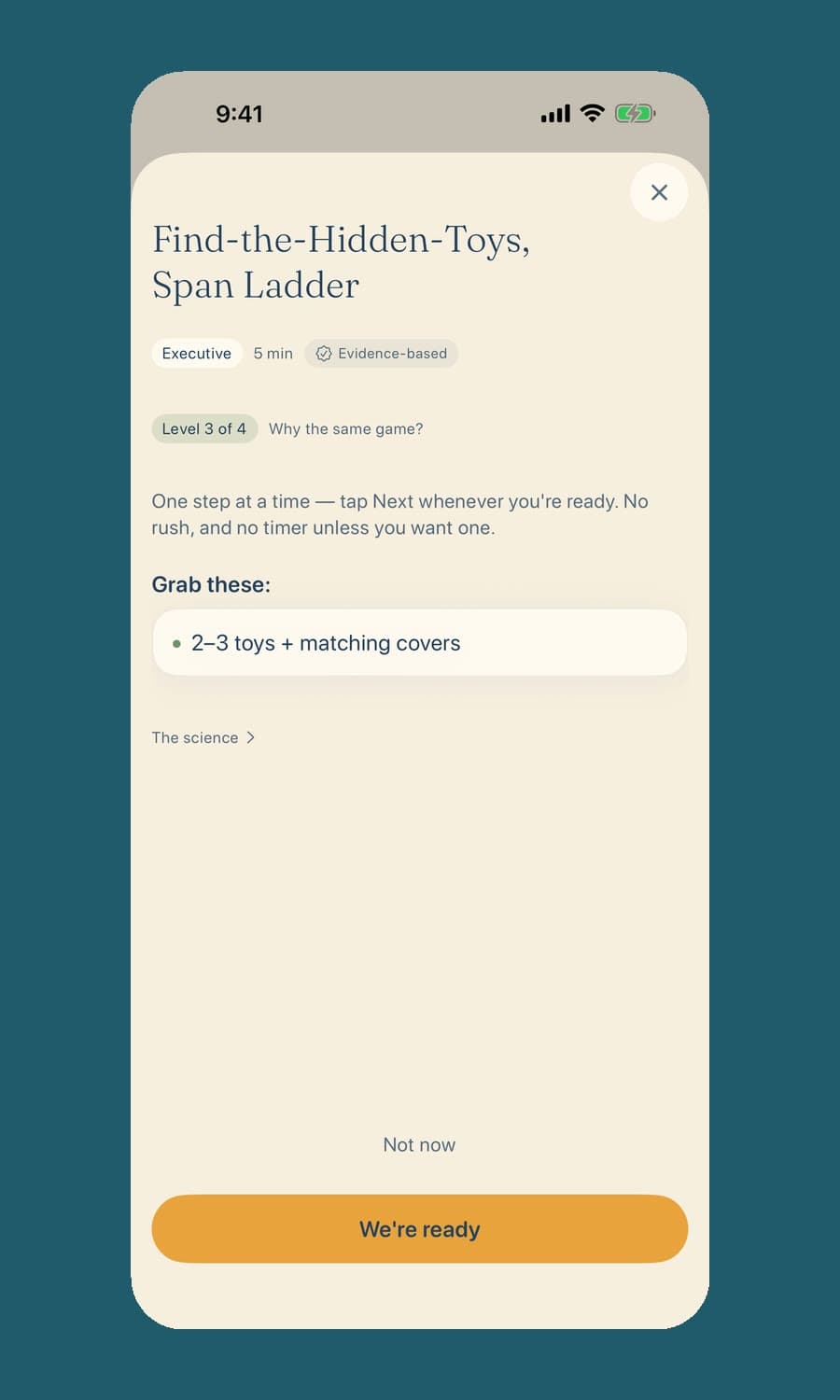
  2. NestIQ's game screen for Find-the-Hidden-Toys: a five-minute, evidence-based game at level 3 of 4, with the first step, grab two or three toys and matching covers, and a We're ready button.
    2

    Step 2: Play, one step at a time

    Tap the game and it walks you through one step at a time, starting with what to grab. There's no timer and no rush, so it fits around a baby's mood.

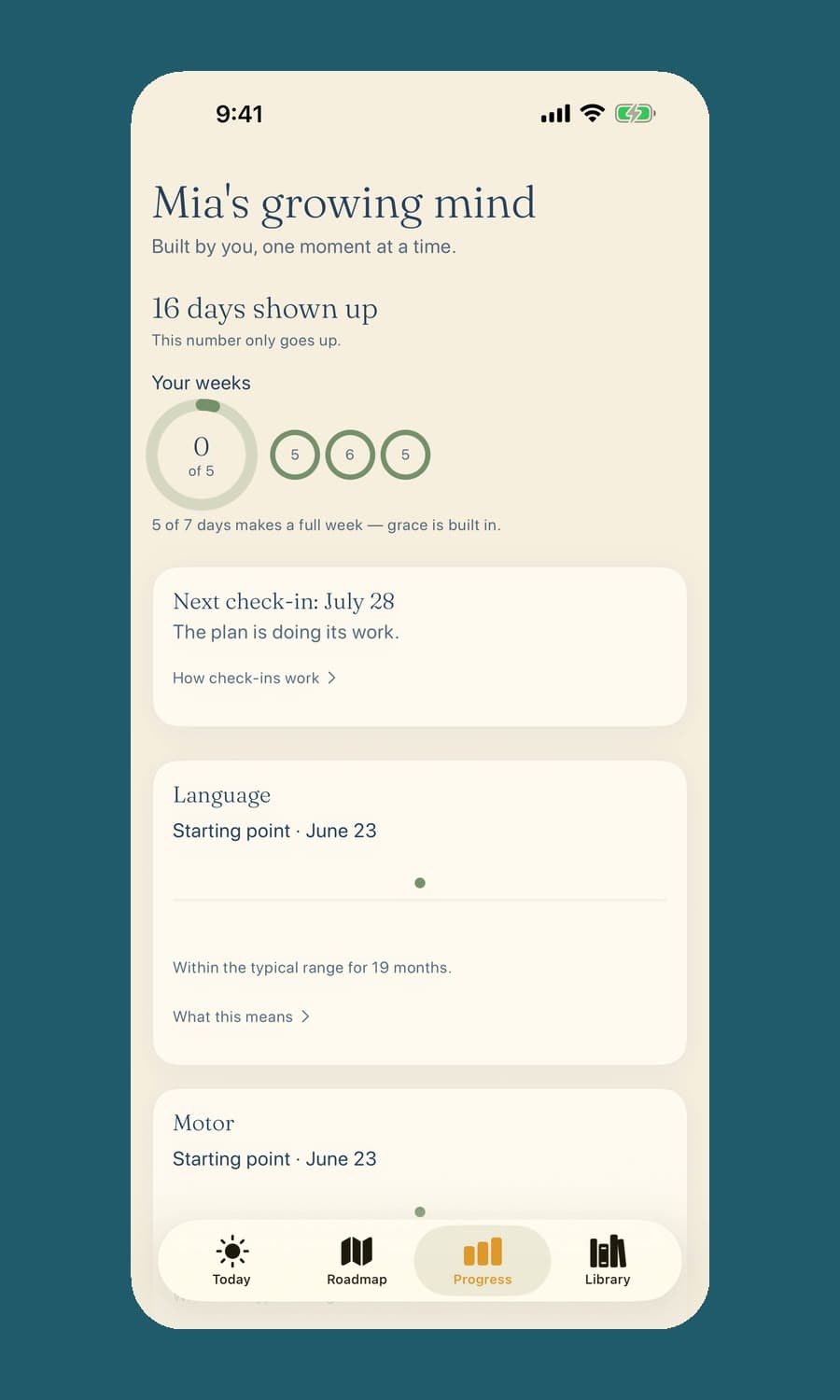
  3. NestIQ's progress page, Mia's growing mind: 16 days shown up, weekly rings, the next check-in date, and starting points for language and motor skills.
    3

    Step 3: See the progress

    A progress page counts the days a parent showed up and schedules check-ins on language and motor skills, so parents can see where their child started and how that changes.

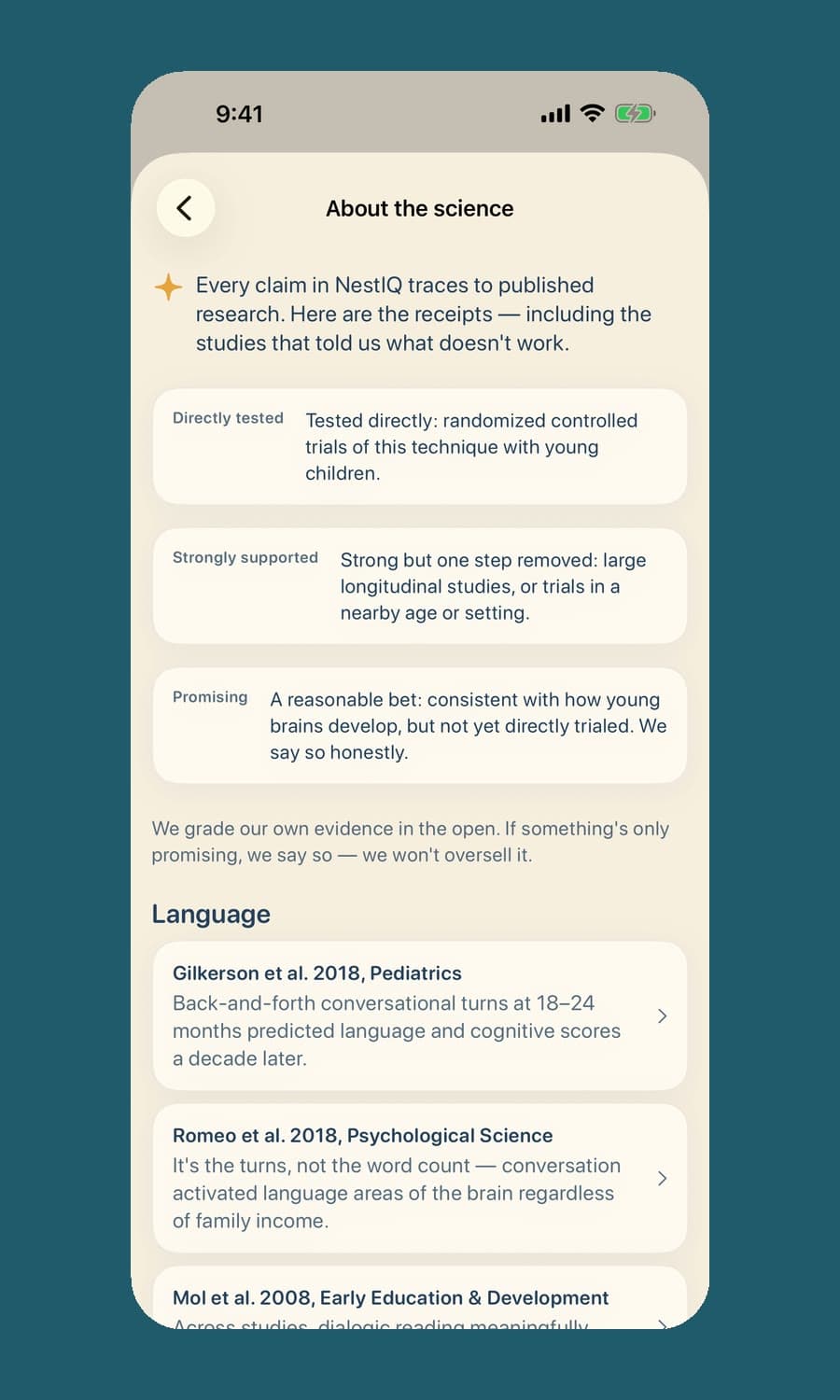
  4. NestIQ's About the science page: evidence grades from directly tested to promising, and a list of language studies with their journals and findings.
    4

    Step 4: Check the science

    Every claim in the app traces to a published study, graded by how strong the evidence is, from directly tested to promising. We show our evidence in the open instead of overselling it.

NestIQ's Today screen for a demo child named Mia: today's game, Find-the-Hidden-Toys, this week's habit, Label-and-Point, and a breakfast boost.
NestIQ's game screen for Find-the-Hidden-Toys: a five-minute, evidence-based game at level 3 of 4, with the first step, grab two or three toys and matching covers, and a We're ready button.
NestIQ's progress page, Mia's growing mind: 16 days shown up, weekly rings, the next check-in date, and starting points for language and motor skills.
NestIQ's About the science page: evidence grades from directly tested to promising, and a list of language studies with their journals and findings.

Ten test builds in eight days

I built NestIQ's iPhone app by directing AI agents. From July 6 to 14 I shipped ten test builds through TestFlight, Apple's service for trying out an app before it's released. By the ninth, 677 automated tests were passing. Every activity is broken into short steps a parent can follow with a baby or toddler, 292 steps across the library.

NestIQ in use, shown with a demo child.

I learned to hand off the work

The app was moving fast, and in week one I was doing about 90% of the team's work myself. That Friday I reset. I held a one-on-one with each teammate and gave each a real job they owned: the website, waitlist and search ranking; market and user research; the marketing plan and its rollout. Then we planned the final pitch together, slide by slide, from the problem to the live demo.

Doing the work yourself and directing a team to do it well turned out to be different skills. The second is the one I use every day now, with people and with AI agents.

We took it to experts and parents

While I built the app, the team assembled a list of 260 experts to contact and booked a call with Adele Diamond, one of the founders of developmental cognitive neuroscience, the study of how children's thinking develops. On July 13 we launched NestIQ's website with a waitlist, and parents started signing up within days.

Best MVP, then the App Store

The program closed on July 16 with the final pitch competition. Out of about 100 students, NestIQ took Best MVP, the prize for the best working first version of a product, and I left with Wharton's certificate of completion. Nine days later, on July 25, NestIQ went live on the App Store. It needs no account and keeps a family's data off the cloud.

Two more doors opened in San Francisco. My roommate there later introduced me to his family's company group in Brazil, which took a demo of Crawft. And at the start of the program's second week, I pitched for an internship over my lunch break.

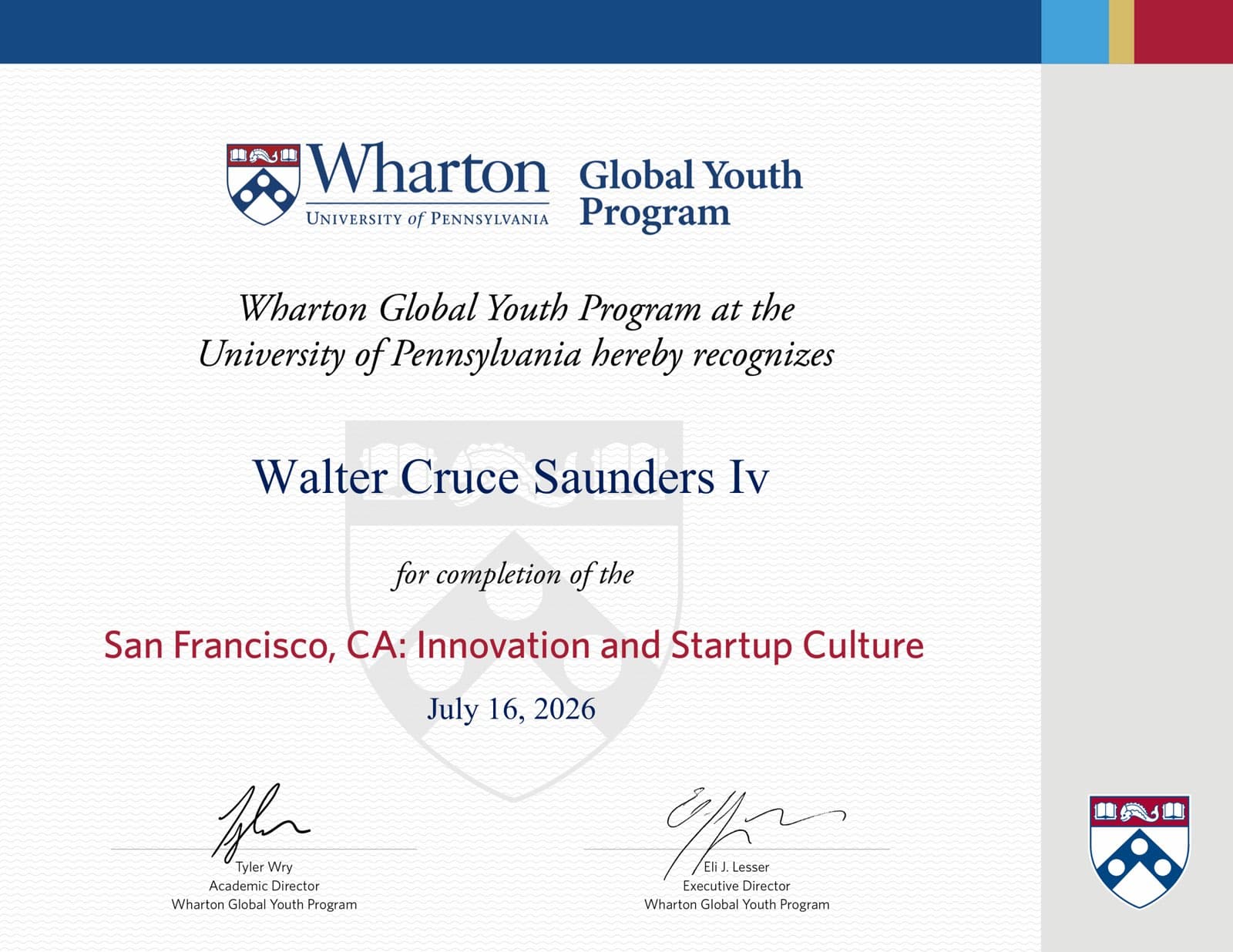
Cruce's Wharton Global Youth Program certificate of completion for Innovation and Startup Culture, dated July 16, 2026.
NestIQ on the App StoreNestIQ website

Led to

  • Level 9SynteqJul–Aug 2026

Back to the world