Cruce Saunders
  • Player card
  • Workshop
  • List
  • Contact

The Workshop

Oct 2025–nowAustin

Tip: The agents that built this website ran through the system on this page.

Cruce SaundersLevel 10
  • Player card
  • Workshop
  • List
  • Contact
Three products Cruce built, side by side: Crawft's team overview for managers, NestIQ's daily plan for parents, and Ippo's run summary on iPhone.

The Workshop

Builder, directing AI agents

Oct 2025–nowAustin

Back to the worldThe Workshop
  • Player card
  • Workshop
  • List
  • Contact
  • Back to the world
  • Player card
  • Workshop
  • List
  • Contact

The Workshop

I build software with teams of AI agents, run by a workflow system I designed.

I decide what gets built and what counts as done. The agents write and test the code.

It built Crawft, two apps on the App Store and an SAT course in about 72 hours.

iOS apps, 2 on the App Store
44
Mac apps
22
web projects
40+40+
AI-agent systems
~12~12

I run a software team made of AI agents

An AI coding agent is a program that can write code, run it and check the result. One agent is useful. Ten working at once tend to collide: they edit the same files, skip the tests and burn through usage limits.

So I designed a system that runs them like a team. I describe what I want in plain English and decide what counts as done. The agents plan, build and test in parallel, and nothing comes back to me as finished without proof that it works.

How one request becomes shipped software

Every request starts at the front desk, the one AI I talk to. Its job is to delegate, so it stays free to answer me while the work runs. Before it acts, Jev, a small routing model I set up, reads the request and what's already running, then judges how big, risky and splittable the work is: answer it now, hand it off, or plan first.

The front desk turns the work into briefs. Each brief names the outcome, the files that agent owns and the one check that proves it's done, and goes to the cheapest model that can do it well: a fast model for mechanical work, a standard one for most tasks, the strongest for hard judgment, or a second AI company's model for an independent build. Workers run in parallel, each in its own copy of the code, and a worker can never start more workers.

When a worker finishes, its evidence is checked against what I asked for. Payments, logins, deletes and deploys also go to a separate reviewer agent that can send the work back. Only then does it ship, and I get a short report.

How a request moves through my agent system

MeFront deskWorkersVerificationShippedJev routerA small, fast model that reads each request and what's already running, then advises the front desk.MeOne request inplain EnglishFront deskThe AI I talk to. Itwrites the briefs andstays freeParallel workersOne brief, its own copy of the code, onecheck eachMechanical workfastMost tasksstandardHard judgmentstrongAn independentbuildCodexVerificationEvidence for every taskTested the way a user wouldA reviewer for payments, logins,deletes and deploysstrongShippedMerged, deployed andreported to meNeeds youA login code or adecisionrequestbriefsevidencepassesfails: redoneeds something only I can giveAnswer it now, hand it off or plan first, by how big,risky and splittable it isThe cheapest model that can do each task wellDoes the evidence show what I asked for?MeFront deskWorkersVerificationShippedJev routerA small, fast model that reads each request andwhat's already running, then advises the frontdesk.MeOne request inplain EnglishNeeds youA login code ora decisionFront deskThe AI I talk to. It writes the briefsand stays freeParallel workersOne brief, its own copy of the code, onecheck eachMechanical workfastMost tasksstandardHard judgmentstrongAn independentbuildCodexVerificationEvidence for every taskTested the way a user wouldA reviewer for payments, logins,deletes and deploysstrongShippedMerged, deployed and reported to merequestbriefsevidencepassesfails: redoneeds something only I cangiveAnswer it now, hand it off or plan first,by how big, risky and splittable it isThe cheapest model that can do each taskwellDoes the evidence show what I asked for?
Anything only I can give, like a login code or a decision, comes straight back to me.Request pathSent backJev router
  • Me: One request in plain English
  • Needs you: A login code or a decision
  • Front desk: The AI I talk to. It writes the briefs and stays free
  • Parallel workers: One brief, its own copy of the code, one check each. Mechanical work (fast); Most tasks (standard); Hard judgment (strong); An independent build (Codex)
  • Verification: Evidence for every task. Tested the way a user would; A reviewer for payments, logins, deletes and deploys (strong)
  • Shipped: Merged, deployed and reported to me
  • Jev router: A small, fast model that reads each request and what's already running, then advises the front desk.
  • Jev router at Front desk: Answer it now, hand it off or plan first, by how big, risky and splittable it is
  • Jev router at Parallel workers: The cheapest model that can do each task well
  • Jev router at Verification: Does the evidence show what I asked for?
  • Me to Front desk: request
  • Front desk to Parallel workers: briefs
  • Parallel workers to Verification: evidence
  • Verification to Shipped: passes
  • Verification to Parallel workers (sent back): fails: redo
  • Parallel workers to Needs you (sent back): needs something only I can give
  • Needs you to Me (sent back)

The rules are the real design

Most of my design work went into rules, because agents are fast, confident and sometimes wrong. They test every feature the way a user would, in a real browser or on a real device. Every task I give goes into a ledger, and no task can be closed without evidence of what was checked and what was seen. If the front desk starts grinding through work itself, a hook nudges it to hand off, so I can always reach it.

Jev also guards my attention. When the front desk wants to ask me something, Jev scores each question against a rubric I wrote: would my answer change the result, is it my kind of decision, could the agent look it up instead. At most three questions reach me, each with a suggested default. Before I trusted any of it, the system ran 60 end-to-end test sessions in a sandbox.

“Making sure the code runs without errors is not ever enough.”

My standing rule for every agent

A normal day: I direct, the agents build

A live dashboard on my Mac shows every chat and every agent as a small pixel-art room. This one is from the session that built this website: me at the top left, the main agent beside me, and five workers below, each on its own task, from curating photos to screenshotting finished pages.

My part during the day is direction and review. I check in between classes, answer what's waiting on me and read the reports. Anything only I can provide, like a login code or a call on design, lands in a Needs you list instead of stalling the work, so the agents keep going while I'm away.

The Crew dashboard during the website build: a pixel-art figure labeled You, a main agent, and five worker agents labeled with their tasks, such as Curate Best Photos and Review Rendered Photo Crops, each with a live status line.
Five agents building this website, each with a live status line.

What the system has built

Every product on this site came out of this way of working. These five show it best, from a full company product to an app built in a week.

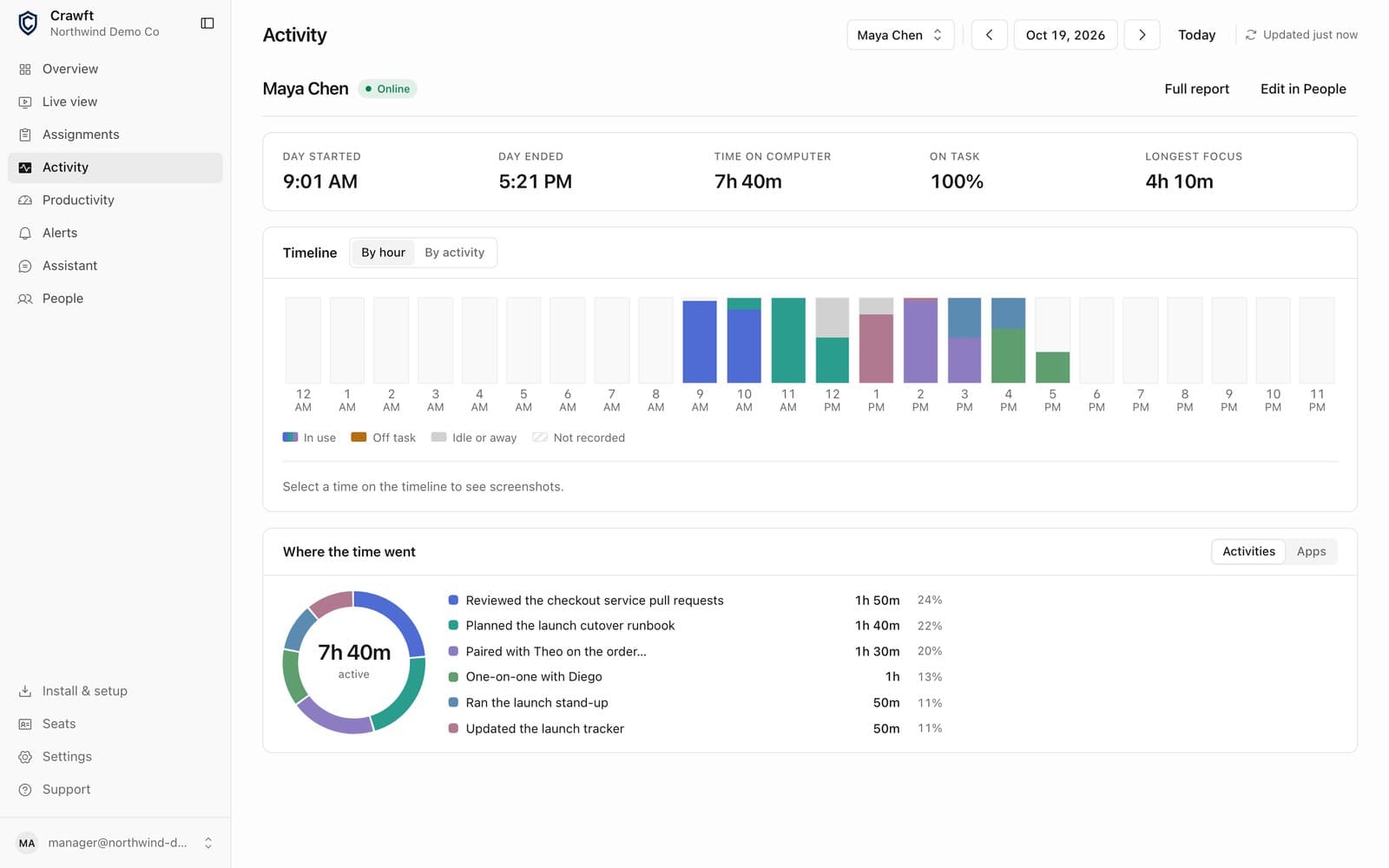
  1. Crawft's Activity page for a demo employee: when her day started and ended, time on computer, an hour-by-hour timeline and a donut of where the time went.
    1

    Step 1: Crawft, my company's whole product

    The largest thing I've built: a Mac app that records a team's workday, a backend on AWS, AI that writes a daily report on each person, and the dashboards managers read. Agents have built all of it from my specs since May 2026, and it's in beta on Macs at Alpha, my school.

    Shown with demo data.

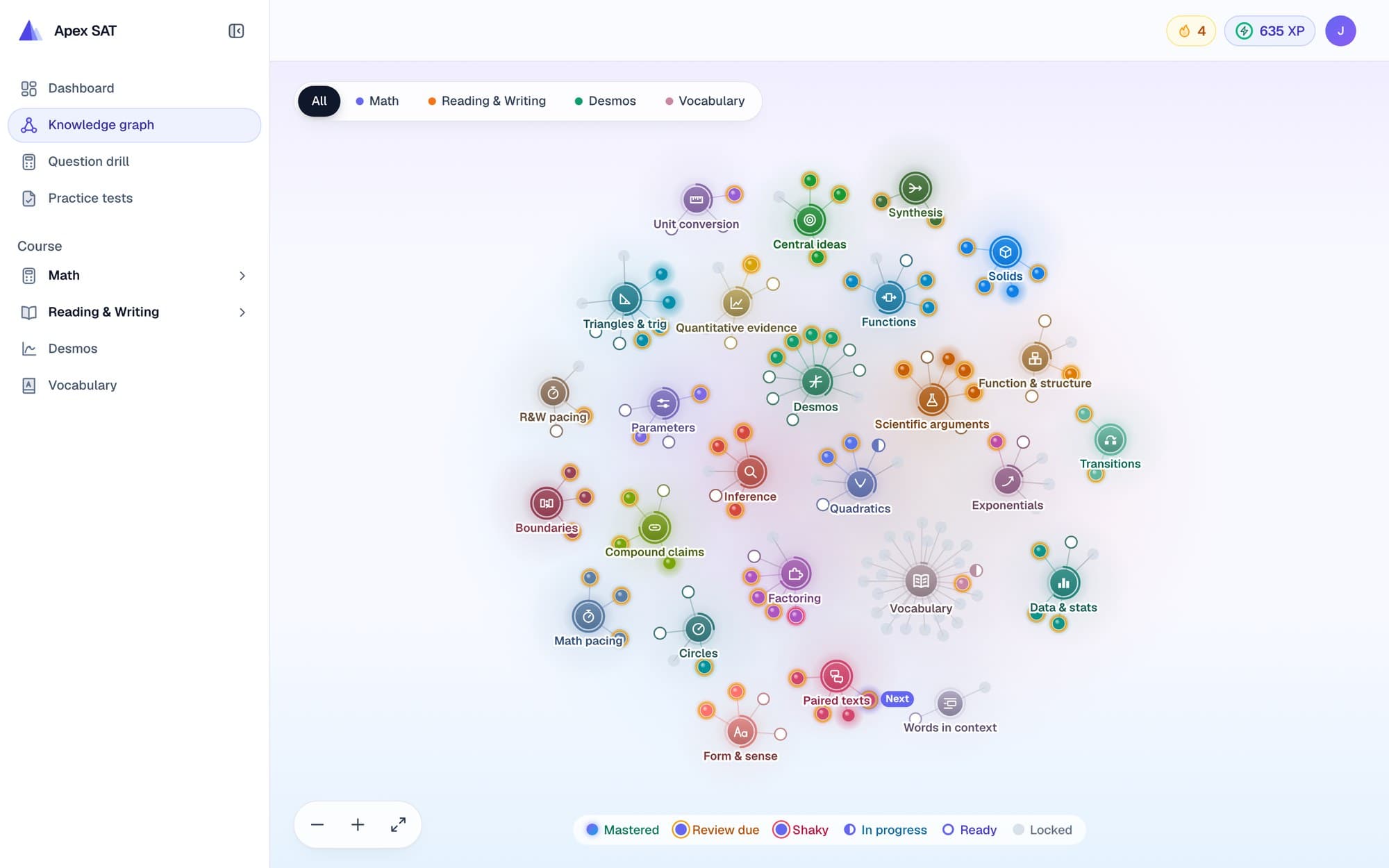
  2. Apex SAT's knowledge graph: skills such as Inference, Quadratics and Paired texts as colored nodes, each ringed by smaller nodes marked mastered, review due, shaky or locked.
    2

    Step 2: Apex SAT, a course in about 72 hours

    On September 29, four days before my own SAT retake, I asked for a course on the hardest parts of the test, built on learning science. Six lanes of agents worked at once. About 72 hours later it had 87 hard questions, the skills underneath each one mapped as a graph that tracks what a student has mastered and brings skills back for review, a short video for every skill and a checkout page.

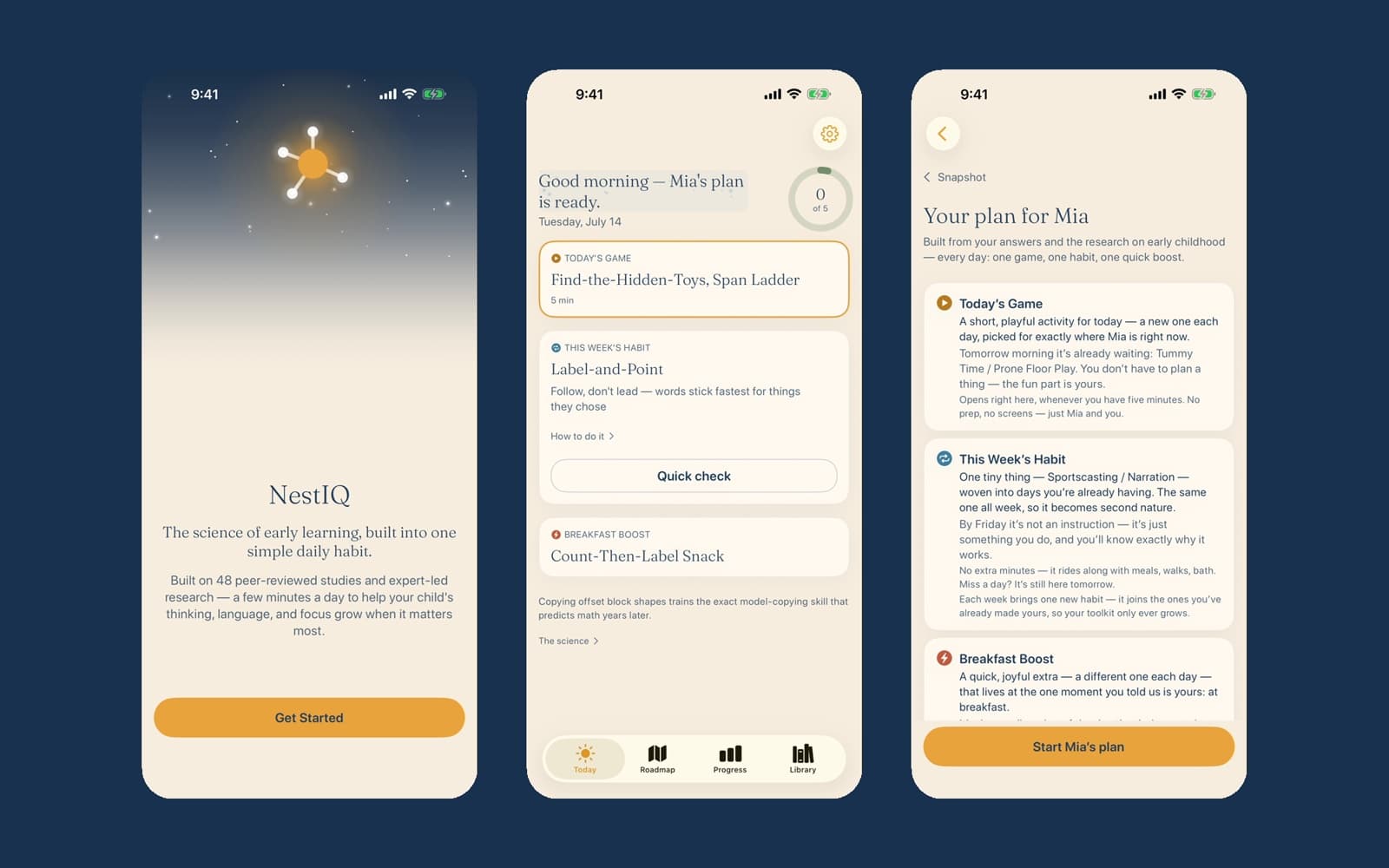
  3. Three NestIQ screens: the welcome screen, a parent's plan for the day with a five-minute game, and a personalized plan for a child.
    3

    Step 3: NestIQ, an App Store app in about a week

    At Wharton's summer startup program I led a team of five and built NestIQ's iPhone app by directing agents. It gives parents of children 0 to 3 a short daily plan of screen-free activities, and it has been on the App Store since July 25, 2026.

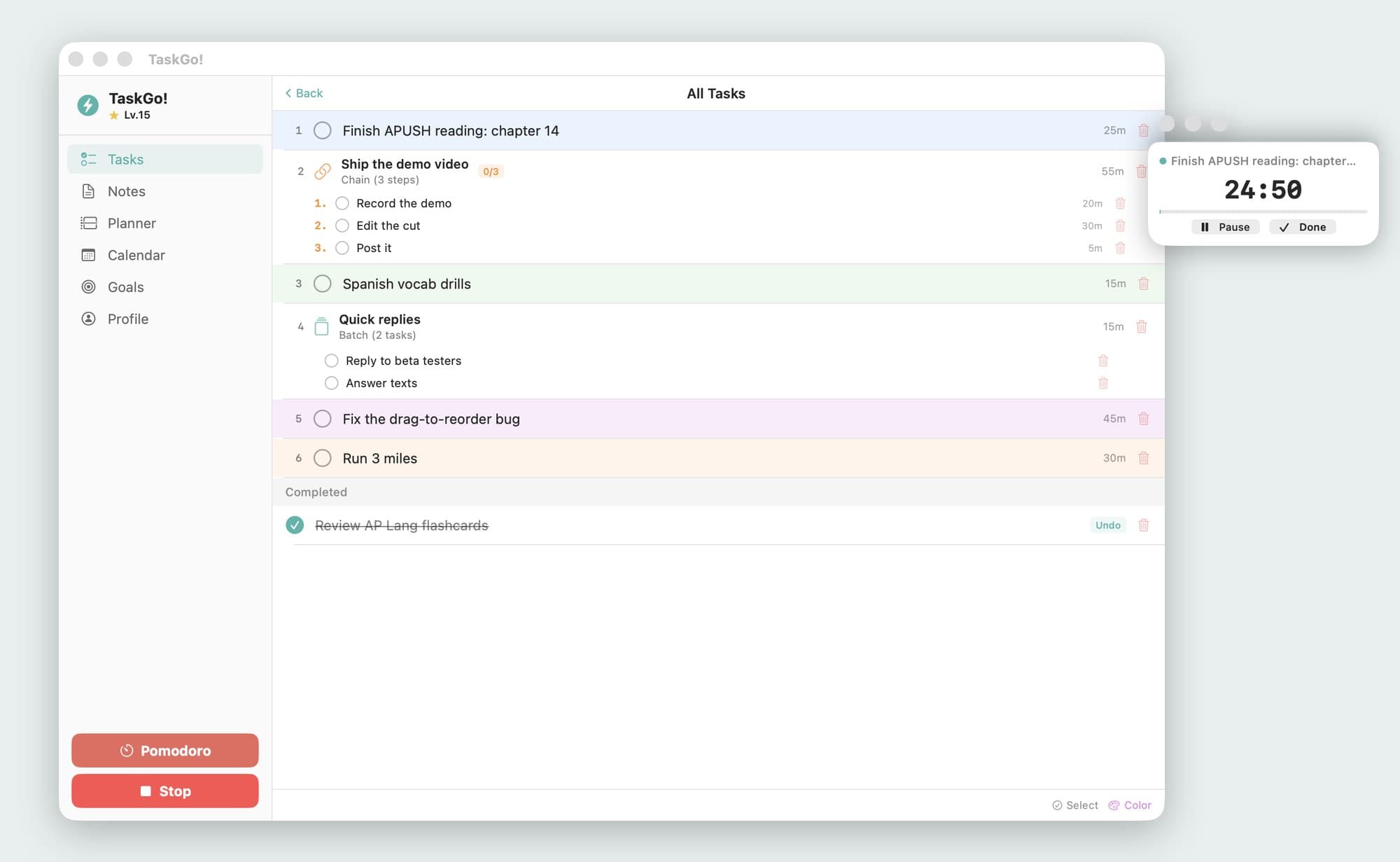
  4. TaskGo!'s task list in a Mac window, with numbered tasks and time estimates, and a floating timer counting down the current task.
    4

    Step 4: TaskGo!, the Mac app that led to Crawft

    TaskGo! lives in the Mac menu bar. Start a task and a floating timer counts down your estimate and sounds an alarm when time's up, and Done moves you straight to the next one. Every minute on a task earns XP toward 100 levels, a planner turns the week into calendar blocks, and Goals tracks bigger projects by milestone. By March an early version had an Activity tab charting my keyboard and mouse use, two months before Crawft took the same question to whole teams: where does the time actually go?

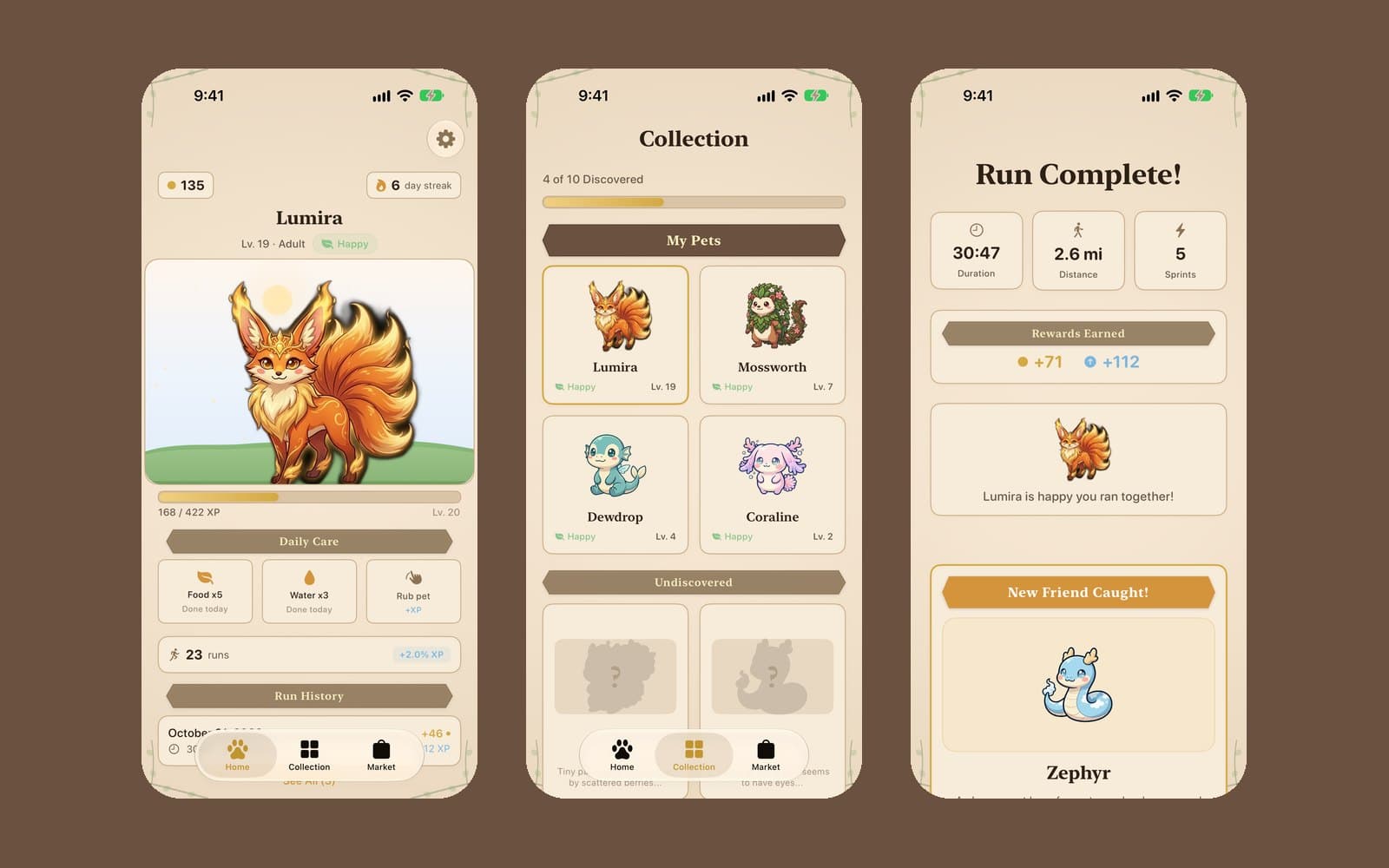
  5. Three Ippo screens in its parchment storybook style: Lumira, a fiery fox, on the home screen, a collection with four of ten pets found, and a run summary with a newly caught pet.
    5

    Step 5: Ippo, an Apple Watch game on the App Store

    Ippo turns a run into a game. Mid-run the watch buzzes, a creature appears and you sprint to catch it, and the coins and XP you earn go to raising the pets you've caught. It has been on the App Store since February 2026, and I pitched it on a show filmed in the ocean off Oahu.

Crawft's Activity page for a demo employee: when her day started and ended, time on computer, an hour-by-hour timeline and a donut of where the time went.

Shown with demo data.

Apex SAT's knowledge graph: skills such as Inference, Quadratics and Paired texts as colored nodes, each ringed by smaller nodes marked mastered, review due, shaky or locked.
Three NestIQ screens: the welcome screen, a parent's plan for the day with a five-minute game, and a personalized plan for a child.
TaskGo!'s task list in a Mac window, with numbered tasks and time estimates, and a floating timer counting down the current task.
Three Ippo screens in its parchment storybook style: Lumira, a fiery fox, on the home screen, a collection with four of ten pets found, and a run summary with a newly caught pet.

Smaller builds, same method

Some builds are experiments. At Stasis, Hack Club's invitation-only hardware hackathon in Austin, I built Drum Cockpit, a nine-pad drum kit that keeps AI voice dictation running while you drum and cuts it off when you stop. For School Game I scanned my school with an iPhone's LiDAR sensor and rebuilt it as a 3D replica you can walk through. My first repo, Maze Antidote, a pixel-art horror maze game, won my school's Horror Game contest.

Drum Cockpit, built at Stasis in May 2026.

1 of 3
Drum Cockpit from above: a nine-pad roll-up drum mat wired to an ESP32 microcontroller on a breadboard, with a pair of drumsticks beside it.

Drum Cockpit, built at Stasis in May 2026.

1 of 3
See every buildHow Crew and Jev work

Led to

  • Level 7CrawftMay 2026–now

Back to the world